 Part Finder
 Promote Your Inventory
Why GE Aerospace Is Paying $11.75 Billion for an Engine-Castings Supplierby Editor - Daniel Brindley | September 21, 2026
GE Aerospace’s planned $11.75 billion acquisition of Consolidated Precision Products is more than the purchase of another parts manufacturer. It is a strategic move to gain greater control over one of the most specialized—and constrained—stages of aircraft-engine production.
Announced on September 8, the transaction is expected to close during the second half of 2027, subject to regulatory approval. CPP manufactures highly engineered airfoils and structural castings for commercial aerospace, defense and industrial gas-turbine customers. GE Aerospace has purchased components from CPP for more than 15 years.
Why CPP matters to GE
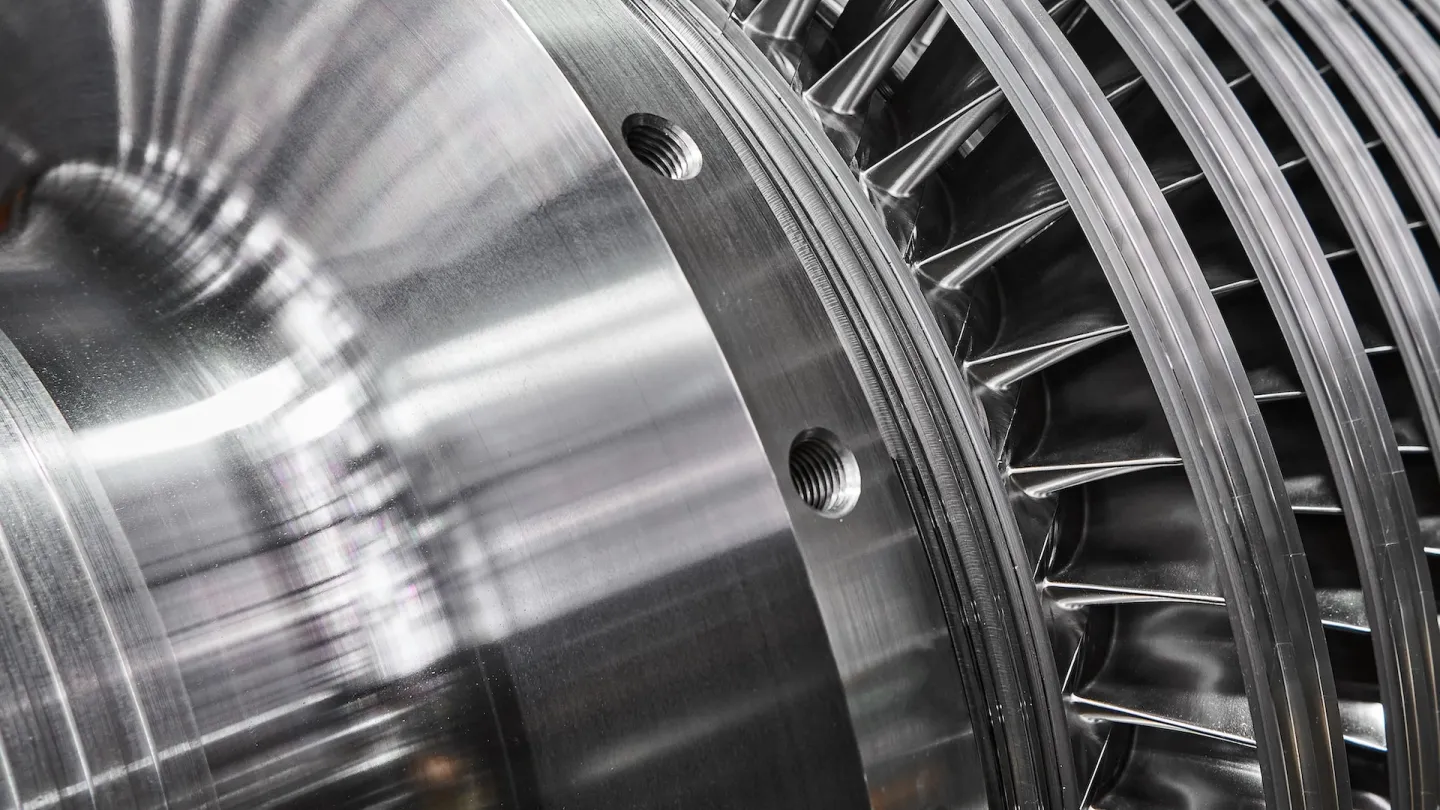
CPP produces castings used throughout aircraft engines and airframes. These include structural components such as frames and housings, as well as turbine airfoils—the rotating blades and stationary vanes that operate in the hottest sections of an engine.

These are not ordinary cast-metal parts. Advanced airfoils require specialized alloys, intricate internal cooling passages and highly controlled manufacturing processes. Some use directionally solidified or single-crystal casting technology to withstand extreme temperatures and rotational forces.
Only a limited number of suppliers can produce these components reliably at scale, making casting capacity difficult and expensive to expand quickly.
By acquiring CPP, GE will bring a strategically important part of its supply chain under direct ownership. This should give the engine manufacturer greater influence over capacity investment, production planning and the introduction of new component designs.
GE Chairman and CEO H. Lawrence Culp Jr. described CPP’s output as “mission-critical casting capacity” needed to meet strong demand across commercial engines, the aftermarket and defense.
Evidence of a wider engine-supply bottleneck
The pressure is not limited to GE or CPP.
The International Air Transport Association, which represents more than 370 airlines, says supplies of aluminum, steel and superalloys remain constrained. Commercial aviation, defense and business aviation are also competing for the same castings, forgings and engine-manufacturing capacity.
GE reported a backlog exceeding $210 billion in 2026, including more than $170 billion in commercial services. The company increased total engine deliveries by 31% during the first half of the year, but it continues to invest heavily in its factories and external suppliers to increase output.
Engine constraints are also affecting the aftermarket. IATA has identified spare-parts shortages, limited spare-engine availability, durability problems and restricted access to alternative repairs as major causes of engine MRO delays.
At the peak in March 2025, 648 aircraft powered by Pratt & Whitney geared turbofan engines—approximately 28% of the GTF-powered fleet—were grounded while awaiting shop visits, replacement engines or parts.
IATA estimated that aviation supply-chain disruption produced approximately $2.6 billion in excess engine-leasing costs during 2025 because engines were spending longer in maintenance and operators needed additional spare engines.
Casting shortages are not solely responsible for these costs, but they form part of a broader scarcity problem affecting new-engine deliveries, replacement parts, maintenance turnaround times and the availability of spare engines.
Vertical integration—but not necessarily a broader strategy
The CPP transaction represents backward vertical integration: an engine manufacturer is acquiring a business operating farther upstream in its supply chain.
However, GE has since said that the acquisition should not be interpreted as a blueprint for widespread vertical integration. The company continues to rely on hundreds of outside suppliers and says it intends to deepen those relationships while selectively addressing critical constraints.
That distinction matters. GE is not attempting to manufacture every component internally. It is buying greater control over a particularly scarce and strategically important capability.
How FLIGHT DECK strengthens the acquisition
GE also believes it can increase CPP’s output by applying FLIGHT DECK, its proprietary lean operating model.
FLIGHT DECK uses standard work, production-flow analysis, daily performance management and structured problem-solving to identify bottlenecks, reduce waste and improve delivery performance. GE has already deployed the system within its own factories and at external suppliers.
The operating model is not the primary reason GE is buying CPP. The main attractions are CPP’s casting capacity, airfoil technology, specialist workforce and position across major aerospace programs.
FLIGHT DECK is instead an important part of how GE expects to create additional value after the acquisition.
GE is not simply purchasing CPP’s existing factories and order book. It plans to combine CPP’s manufacturing experience with additional investment, GE’s engineering capabilities and FLIGHT DECK to improve quality and increase output.
Bringing airfoil design and manufacturing closer together could also shorten development cycles and help GE introduce new components more quickly. GE says enhanced airfoil technology can improve engine durability and efficiency by reducing metal temperatures inside the engine.
This combination of ownership, investment and operational improvement helps explain why GE is willing to pay such a substantial price for a company operating well upstream of final engine assembly.
What happens to CPP’s other customers?
CPP supplies components for nearly every major current-generation commercial-aircraft program, as well as defense and power-generation customers.
Ownership will naturally give GE greater influence over CPP’s future capital investment, engineering resources and production priorities. This raises reasonable questions for other manufacturers that rely on CPP, including GE competitor Pratt & Whitney.
It would be premature, however, to conclude that GE intends to deprioritize competing customers.
GE says the investment will build capacity supporting customers throughout the aerospace and defense industry. Continuing to serve CPP’s wider customer base would also be commercially prudent: third-party sales produce revenue, help spread manufacturing costs and may be important when regulators review the transaction.
The issue to watch is therefore not whether GE immediately cuts off competitors, but how CPP allocates additional capacity and investment after the transaction closes.
What the acquisition means for the aftermarket
For airlines and MRO providers, the potential benefit will depend on whether GE can translate the acquisition into meaningful increases in component availability.
Greater casting output could support new-engine deliveries, replacement-part production and the development of more durable components. That could eventually help reduce maintenance delays and keep engines on wing longer.
The transaction also illustrates the growing strategic value of companies controlling difficult-to-replicate manufacturing capabilities. In the current market, specialized parts, proprietary repairs, approved processes and scarce production capacity can be more valuable than inventory alone.
For independent parts distributors and MRO providers, the acquisition presents a mixed picture. Additional production could improve parts availability, but the transaction also places more of the engine supply chain under the control of an OEM that already holds a powerful position in the aftermarket.
That tension—between increased capacity and greater OEM control—may prove to be the most consequential aspect of the CPP acquisition for the aviation aftermarket.