 Part Finder
 Promote Your Inventory
Selling Aircraft Parts: What Does It Take to Succeed?by Editor - Daniel Brindley | August 10, 2026
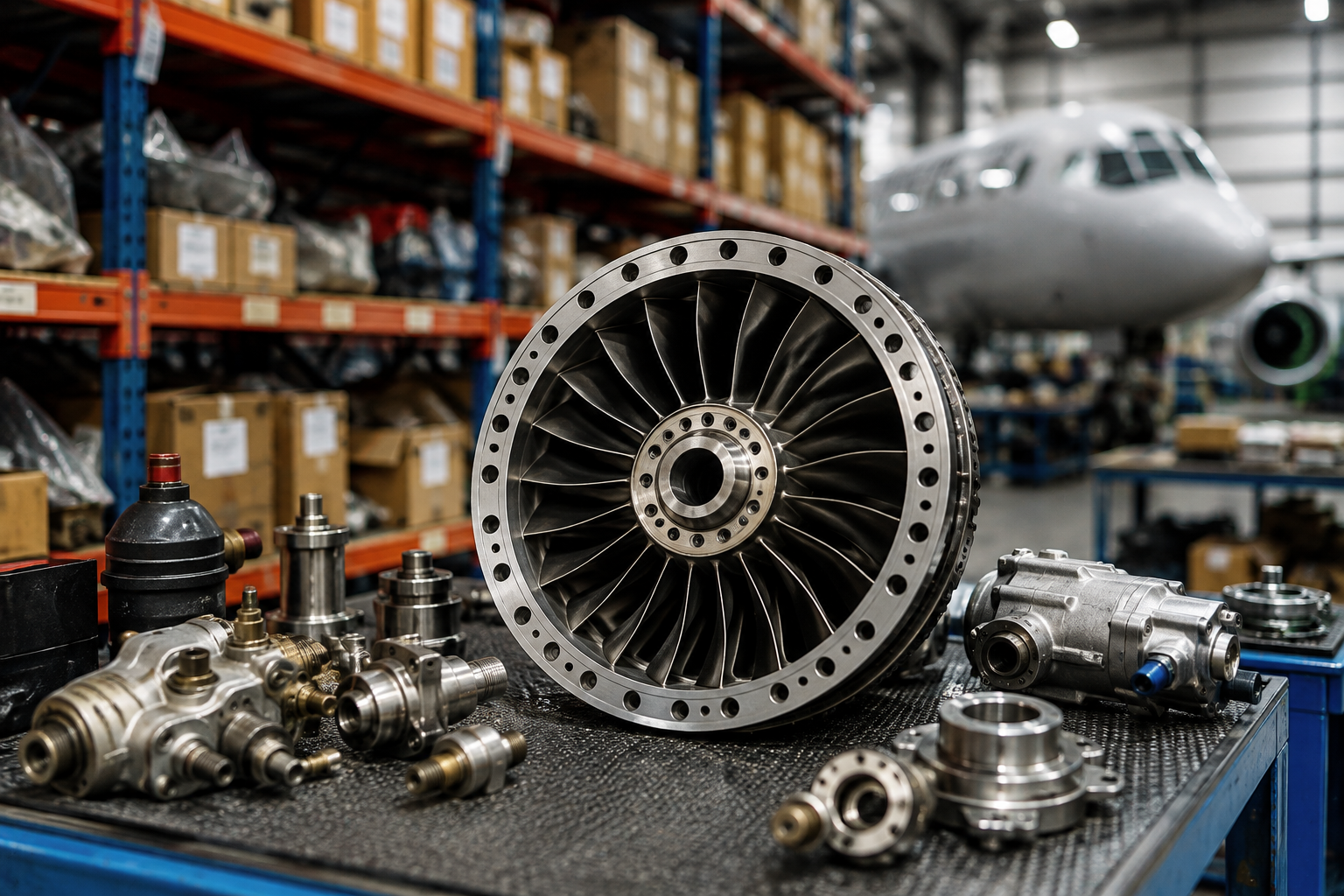
What separates successful aircraft parts salespeople from the rest? Six years later, we revisit the importance of buying right, speed, relationships, market knowledge, technology and AI.
Six years ago, I wrote an article for PureMRO called The Business of Buying and Selling Aircraft Parts. At the time, I spoke with several people who had spent decades in the aircraft parts business and asked a fairly simple question: What does it take to succeed buying and selling aircraft parts? Their answers focused on experience, relationships, reputation, understanding aircraft and parts, documentation, buying correctly and, in some cases, having deep enough pockets to take advantage of opportunities. Six years later, I have considerably more firsthand experience buying and selling aircraft parts myself. So, I thought it would be interesting to revisit the subject and ask: Were they right, and has my own opinion about what it takes to succeed changed? Technology certainly has. AI has arrived, online marketplaces have continued to evolve, and access to information is better than ever. But after spending more time on both sides of aircraft parts transactions, I have found that many of the fundamentals haven’t changed nearly as much. Due to non-disclosure agreements, I cannot discuss specific companies, customers, people, parts or transactions. What I can share are some of the lessons I have learned along the way.
You Can’t Be a Good Salesperson Unless You’re a Good Buyer
I have heard versions of this phrase several times from successful salespeople in the aviation parts industry, and there is a lot of truth to it. Aircraft parts sales isn’t simply about responding to RFQs and adding a margin. A good salesperson “makes things happen.” Sometimes that means finding a part nobody else can locate. Other times it means finding an opportunity, buying a part at the right price and already having a good idea of who might need it. Both require skill. A salesperson needs to understand the market well enough to recognize a good buy. What is the part normally worth? How much demand is there? Is it difficult to find? What condition sells best? What documentation will customers expect? Ultimately, buying correctly gives you the ability to sell competitively while still generating a healthy gross margin. You can be a fantastic communicator, but if you consistently buy at the wrong price, aircraft parts sales becomes very difficult.
Speed Matters — Especially When It’s AOG

When an aircraft is AOG, speed can change everything. The customer may not be looking for the cheapest part available somewhere in the world. They may need a serviceable part that can ship in the next few hours. Being the first salesperson to provide a credible solution can therefore be extremely valuable. But there is a difference between being fast and being reckless. Sending a quote quickly doesn’t help if the stock isn’t actually available, the certification doesn’t meet the customer’s requirements, the lead time is wrong or the part can’t legally or practically be shipped as promised. The best salespeople learn to move quickly while still asking the right questions.
Drop Shipping
Billions of dollars in aircraft parts are drop shipped every year. When your customer is AOG, being able to drop ship a part directly from an OEM, distributor or another supplier the same day can be a huge relief. An experienced broker can build a successful career working from home without ever operating a warehouse. In theory, all you need is a computer, phone, customers and a network of suppliers. Knowing who has the part, who has the best price and who you can trust can be enough to create considerable value. There is, however, a downside. When your company’s address, packaging and certification aren’t in the box, you sometimes expose your source. Your customer may attempt to buy directly from that supplier next time. Price can provide some protection. If your customer cannot obtain the same pricing you receive, there may still be little incentive for them to cut you out. This is also where “deep pockets” and purchasing power become important. A company buying millions of dollars of inventory or holding a distribution agreement with an OEM can often obtain pricing and terms that an individual broker simply cannot match. As a result, drop shipping isn’t limited to small brokers. For larger distributors, it can become a significant part of the business.
Inventory Still Creates an Advantage
Brokerage provides flexibility, but owning the right inventory creates another kind of advantage. If you own the part, control the price and can ship it immediately, you remove several variables from the transaction. The important word, however, is right inventory. Buying aircraft parts simply because they appear inexpensive can quickly fill shelves with inventory nobody wants. Successful inventory purchasing requires understanding demand, aircraft fleets, historical sales, market availability and pricing. Capital matters in this business, but knowing where to deploy that capital matters even more.
Relationships and Reputation Still Matter
Aircraft parts may be identified by numbers, but this remains a relationship business. Buyers remember the salesperson who answered the phone during an AOG. They remember who found the impossible part. They also remember who promised something was available and then couldn’t deliver it. The same applies on the purchasing side. Strong relationships with OEMs, distributors, repair stations, teardown companies and other brokers can provide access to inventory, pricing and information that isn’t always visible on a database. And sometimes the best thing you can tell a customer is simply: I can’t help you with this one. Protecting a long-term relationship can be much more valuable than forcing a questionable short-term transaction.
Know What You’re Actually Selling
Finding the correct part number is only the beginning. Condition, certification, traceability, shelf life, modification status and other documentation can determine whether a customer can actually use the part. Salespeople don’t need to replace their quality department, but they should understand enough to ask the right questions. Does the customer require an FAA 8130-3? Will they accept an EASA Form 1? What trace is available? Is the unit new, overhauled, repaired or serviceable? Are there shelf-life considerations? Finding a $20,000 component for $12,000 doesn’t accomplish much if the documentation makes it unacceptable to your customer. In aviation, paperwork can be almost as important as the part inside the box.
Data and Technology
You can still pick up the phone and call around, but if you have thousands of parts to sell, technology becomes essential. Companies can list inventory on their own websites, while industry marketplaces such as ILS and PartsBase provide immediate access to thousands of aviation buyers and sellers. These platforms offer an important advantage: the audience already exists. Building your own website can provide greater control over your brand, customer relationships and marketing, but attracting qualified traffic requires time and investment. For many companies, the best strategy is not necessarily choosing one or the other. It is using multiple channels to make inventory as visible as possible to the people most likely to buy it. But databases don’t replace salespeople. Knowing that somebody has a part is very different from knowing whether they really have it, whether the documentation is acceptable, whether the price is realistic and whether they can actually deliver it when promised.
What About AI?
Artificial intelligence has changed many areas of sales and research, but aircraft parts remain a difficult market for AI. One reason is simple: much of the most valuable information isn’t public. Many aircraft parts companies don’t publish pricing online. Availability can change rapidly, and websites and databases may restrict automated access. Transactional pricing is also influenced by condition, documentation, quantity, lead time and immediate supply and demand. A part that normally sells for one price can suddenly become considerably more valuable when supply disappears and several operators need it. AI doesn’t necessarily have access to that real-time market information. There are also areas where I would be extremely cautious about relying on AI-generated answers. Is the part hazardous material? Does it require an export license? What are the exact dimensions and shipping weight? Is it approved for a particular aircraft application? These questions can have financial, regulatory and safety consequences, and information should be confirmed using authoritative sources. That doesn’t mean AI isn’t useful. It can be an excellent research assistant. AI can help identify manufacturers, investigate aircraft applicability, explain terminology, locate potential suppliers and organize information much faster than traditional web research. But there is an important distinction: AI can help you find the answer. It shouldn’t automatically be treated as the answer.
Don’t Become a Quote Machine
One of the easiest traps in aircraft parts sales is spending the entire day responding to RFQs without learning anything from them. If you send hundreds of quotes but rarely understand why you won or lost the business, you are missing valuable information. Was your price too high? Was the condition wrong? Did the customer require different certification? Was your lead time too long? Did somebody else have stock closer to the aircraft? Or was there never a real requirement in the first place? Following up helps close business, but it also makes you a better buyer. Over time, those conversations help you understand what the market actually values.
Know When to Walk Away
Not every RFQ deserves the same amount of time. Some customers request enormous numbers of quotes and rarely place orders. Some opportunities offer so little margin that the time and risk involved make little commercial sense. And occasionally, you simply don’t have enough information to confidently sell the part. Successful salespeople learn to prioritize. A $500 sale requiring two hours of research, multiple international phone calls and complicated shipping may be less valuable than spending those same two hours developing a customer who could generate substantial repeat business. Being busy isn’t necessarily the same thing as being productive.
Information Is Still the Currency of Aircraft Parts Sales
Looking back at what I wrote six years ago, technology has certainly changed. AI is becoming part of everyday business. Websites are more sophisticated. Data is easier to analyze, and buyers can search enormous amounts of inventory in seconds. But the fundamentals haven’t changed nearly as much. Who has the part? What condition is it in? What documentation comes with it? Where is it located? How quickly can it ship? What is the real market price? Who needs it? And perhaps most importantly: who do you trust? The successful aircraft parts salesperson brings those pieces of information together faster and more effectively than the competition. Technology can help you do that. But relationships, market knowledge, persistence, good judgment and the ability to buy correctly remain difficult to automate. Six years later, perhaps the biggest lesson I have learned is that aircraft parts sales isn’t really about selling parts. It’s about knowing where the opportunity is — and knowing what to do when you find it.