 Part Finder
 Promote Your Inventory
Repair or Overhaul? The Decision Behind a Global Express Brake by Editor - Daniel Brindley | August 15, 2026
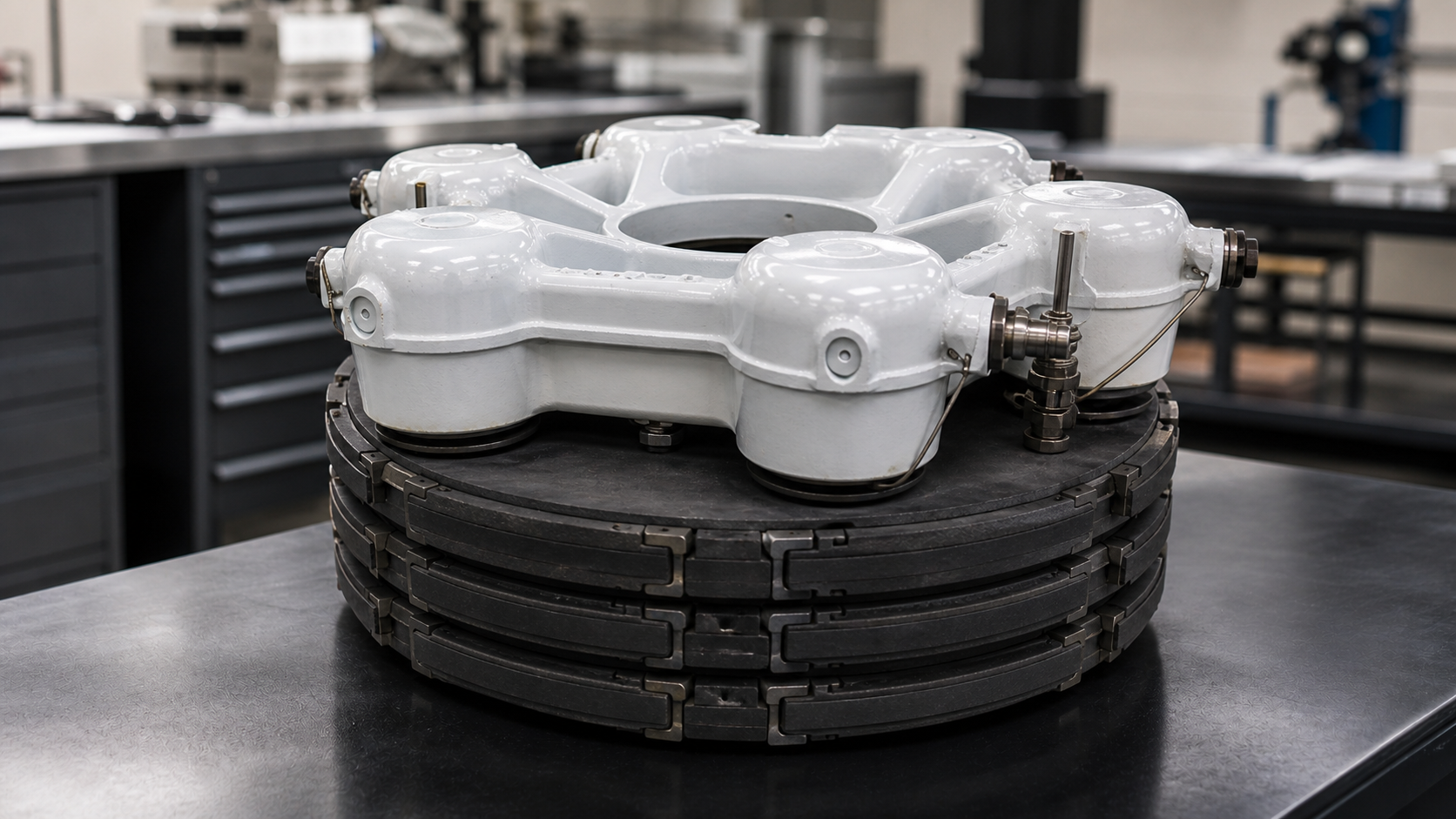
When a Global Express brake comes off the wing, the quote rarely tells the whole story. Here’s what buyers should look for in the work scope, remaining carbon, shop capability and 8130-3 documentation.
Repair or Overhaul? What’s Really Behind a Global Express Brake Quote
A Global Express brake that came off the wing shows why the condition on the 8130-3 is only part of the story. Carbon life, shop capability and what’s actually included in the quote can matter just as much.
Editor’s note: This article describes a real-world aviation maintenance situation. Company and individual names have been withheld to respect commercial confidentiality, and certain nonmaterial details have been generalized.
A Brake Comes Off the Wing

A maintenance manager responsible for a long-range business jet got a call from the hangar. One of the main landing-gear brakes had to come off the wing.
The unit was a GW313-2001-3 brake assembly used on several Global Express-family aircraft. The aircraft had another trip coming up, so the team couldn’t afford an open-ended turnaround.
The RFQs went out.
One shop quoted a repair. Another quoted an overhaul. There was a sizeable difference in price, and the repair initially looked like the easy choice.
Once the scopes came back, though, it was clear they weren’t quoting the same job.
Repaired Isn’t Overhauled
Most experienced maintenance buyers already know the difference.
A repair is usually tied to a specific squawk or shop finding. The brake may have come off for a leak, wear issue, damaged component or another discrepancy. The shop addresses the problem, completes the required testing and releases the unit as repaired.
An overhaul goes further. The brake is processed under the applicable overhaul instructions, which generally means it’s disassembled, cleaned, inspected, repaired as needed, reassembled and tested.
That doesn’t make a repair the wrong choice. If the squawk is clear and the rest of the brake is still within limits, there may be no reason to pay for a full overhaul.
The problem starts when an RFQ response gives the buyer a price and a condition but doesn’t make the scope clear.
Can the Shop Actually Do the Work?
An FAA Part 145 certificate doesn’t mean a facility can work on every component that arrives at its dock.
The brake and the work being quoted must be within the repair station’s approved capability. The shop also needs the current maintenance data, correct tooling, calibrated test equipment and technicians who know the product.
Some wheel-and-brake shops can handle nearly everything in-house. Others send out NDT, plating, carbon work or other specialized processes.
There’s nothing unusual about that, and it doesn’t mean the finished brake won’t be airworthy. It can affect the clock, though.
Once parts leave the main facility, another shipment and another set of paperwork enter the job. The final shop can’t put the brake back together and issue the 8130-3 documentation until the parts and supporting records are back and accepted.
For tech ops trying to protect a flight schedule, “10-day shop time” doesn’t say much if it excludes two weeks at an outside vendor.
The Carbon Can Change the Whole Deal
The carbon heat stack can represent a large share of the brake’s remaining value.
This is where an overhaul quote can be misunderstood. An overhauled brake doesn’t automatically come back with 100% carbon.
The FAA standard is based on conformity with the applicable service tolerances. If the CMM allows the existing carbon to go back into the brake, the shop may reuse it and still release the assembly as overhauled.
Many operators don’t want that. If they’re buying an exchange unit or planning for maximum time on wing, they may specify 100% carbon in the purchase order.
Repaired brakes can be offered with considerably less. Public listings for this brake family have advertised units with a minimum of 30% remaining wear.
A 30% brake isn’t automatically a bad brake. If the carbon meets the CMM limits and the work has been completed correctly, it may be perfectly airworthy. It just isn’t worth the same as a brake with a full-life heat stack.
Without the carbon details, a low repair quote can look much better than it really is.
The Operator Can Ask for More Than the Minimum
The CMM or other accepted maintenance data sets the service limits. Neither the operator nor the shop can simply decide to put the carbon back into service if it’s outside those limits.
An operator can set a higher purchasing standard.
One operator may accept a brake with 50% carbon. Another may require 70%, 80% or 100%. Aircraft utilization, fleet plans, upcoming checks and access to spare brakes can all influence that decision.
A unit can be airworthy but still not suit the operator’s maintenance plan.
For a high-utilization aircraft, paying more for a full-life stack may reduce removals and future shop visits. For a lightly flown aircraft or an AOG requirement, a lower-cost repaired unit with less carbon might be the sensible option.
Where’s the Carbon Recorded?
Buyers often ask for the carbon percentage on the FAA Form 8130-3. It can be recorded there, but the FAA doesn’t specifically require the remaining percentage to appear directly on the form in every case.
Block 11 shows the work status, such as “REPAIRED” or “OVERHAULED.” Block 12 describes the work and can include additional details or point to supporting documents.
The carbon measurement might appear in Block 12, the teardown report, a shop report or the final work order.
Wherever the shop records it, the number should tie back to the brake’s part number, serial number, work order and 8130-3.
The buyer should also ask what “100% carbon” means in that quote. Shops and sellers don’t always present remaining wear in exactly the same way, so the measurement basis matters.
The First Quote Usually Isn’t the Final Number
The incoming quote gets the brake through the door. The teardown tells everyone what the job will actually cost.
Once the unit is open, the shop should report the carbon condition, parts that didn’t pass inspection, outside work, revised turnaround and any increase over the original estimate.
The customer should see those findings before the shop moves ahead with work outside the original authorization.
This is also where the phrase “beyond economic repair” can create confusion.
It doesn’t always mean the brake can’t be repaired. It may mean the carbon, replacement parts, labor and vendor work have pushed the estimate to a point where an exchange or replacement unit makes more sense.
That’s different from a part being outside the CMM limits. One is a commercial call. The other is a technical limit the shop can’t ignore.
Comparing What’s Actually Being Offered
In this case, the maintenance manager went back through both proposals.
The review wasn’t limited to the repaired-versus-overhauled line on the quote. Tech ops looked at remaining carbon, in-house capability, vendor work, testing, 8130-3 documentation, turnaround and possible charges after teardown.
That changed the comparison.
Experienced buyers know repaired and overhauled aren’t the same. What they can’t always see from the first RFQ response is how much carbon is left, what work is included and how long the brake is realistically expected to remain on the wing.
For this operator, the better proposal wasn’t simply the cheapest or the one with the most impressive condition. It was the one that made the scope, carbon and financial exposure clear before the purchase order was issued.