 Part Finder
 Promote Your Inventory
How to Choose the Right FAA Repair Station for Your Aircraftby Editor - Daniel Brindley | July 8, 2026
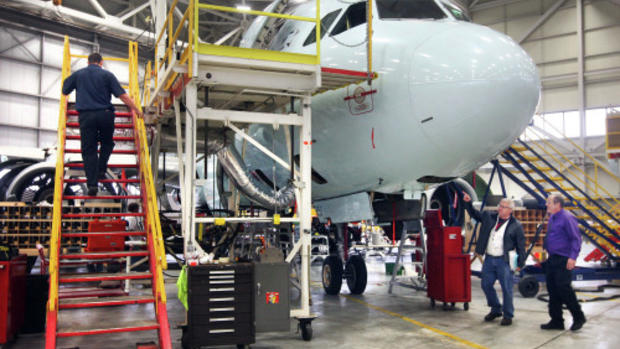
Choosing the right FAA-certified repair station is one of the most important decisions an aircraft owner or operator can make. Beyond regulatory compliance, the quality of maintenance directly affects aircraft safety, reliability, residual value, and operational availability. This guide outlines the key factors to consider when evaluating an FAA Part 145 Repair Station for business jet airframe maintenance and provides practical recommendations to help you make an informed decision.
Understanding FAA Airframe Ratings
An FAA Airframe Rating authorizes a certificated FAA Part 145 Repair Station to perform maintenance, repairs, alterations, and inspections on an aircraft’s structure and associated systems.
Depending on its ratings and capabilities, an airframe repair station may offer services including:
- Structural inspections and repairs to the fuselage, wings, empennage, and other primary structures.
- Corrosion detection, prevention, and treatment programs to preserve structural integrity.
- Airframe modifications and STC installations to support aircraft upgrades and regulatory compliance.
- Replacement of structural components such as skins, spars, control surfaces, and landing gear assemblies.
- Landing gear inspection, overhaul coordination, repair, and component replacement.
- Scheduled inspections including phase inspections, major maintenance events, and damage assessments.

Not every repair station offers the same capabilities. Always confirm that the facility is approved to perform the specific maintenance required for your aircraft make and model.
Key Factors When Evaluating an FAA Repair Station
While industry reputation and recommendations remain valuable, they should be combined with independent due diligence. The following areas deserve careful evaluation before selecting a maintenance provider.
Verify FAA Part 145 Certification
The first step is confirming that the repair station holds a current FAA Part 145 Repair Station Certificate with ratings appropriate for your aircraft.
The FAA maintains an online Repair Station Directory that allows operators to verify certifications, ratings, and locations. Reviewing this information is an excellent starting point before engaging any maintenance provider.
Evaluate Technical Expertise
A quality repair station employs experienced aviation maintenance professionals with appropriate certifications and ongoing training.
FAA Airframe & Powerplant (A&P) Mechanics
FAA-certificated Airframe and Powerplant (A&P) mechanics form the backbone of most maintenance organizations. Their certification demonstrates comprehensive knowledge of aircraft maintenance, inspection, preventive maintenance, alterations, and return-to-service procedures.
Experienced A&P technicians should be readily available throughout the maintenance process.
Repairman Certificates
Not every technician performing maintenance is required to hold an A&P certificate.
FAA Repair Stations may employ technicians working under Repairman Certificates, allowing them to perform specific maintenance functions within that repair station’s approved operations. While more limited in scope than an A&P certificate, these personnel are qualified for designated tasks under the repair station’s quality system.
Assess the Facility
Whenever possible, visit the repair station in person.
An on-site inspection often provides valuable insight into how the organization operates and whether it maintains professional standards.
Look for:
- Clean, organized hangars and work areas
- Properly maintained tooling and support equipment
- Clearly identified parts storage areas
- Good housekeeping practices
- Professional documentation and work tracking systems
- Well-maintained customer facilities and administrative offices
Conversely, cluttered workspaces, poorly maintained equipment, or disorganized parts inventory may indicate deficiencies in quality control and operational discipline.
Review Documentation and Quality Systems
Documentation is a critical component of aviation maintenance.
A reputable repair station should maintain accurate maintenance records, inspection reports, work orders, and airworthiness documentation.
When evaluating a facility, pay attention to whether they:
- Provide clear maintenance documentation
- Explain work scopes in detail
- Maintain organized inspection records
- Communicate maintenance findings promptly
- Offer transparent estimates and timelines
Reluctance to share documentation or vague answers regarding maintenance procedures should be considered warning signs.
Check Insurance Coverage
Adequate insurance coverage is another important consideration.
A professional repair station should maintain comprehensive liability insurance appropriate for the aircraft it services. This protects both the maintenance provider and the aircraft owner in the event of accidents, property damage, or other unforeseen incidents.
Do not hesitate to request proof of insurance if significant maintenance work is being performed.
Review FAA Compliance History
Past regulatory performance can provide useful insight into a repair station’s commitment to quality and compliance.
The FAA publishes enforcement information covering various aviation certificate holders, including repair stations. Reviewing publicly available enforcement actions can help identify any significant compliance issues or recurring regulatory concerns.
While a single historical event does not necessarily indicate poor performance, repeated violations or serious enforcement actions warrant further investigation.
Ask for References
Experienced business aircraft operators are often willing to share their maintenance experiences.
Request references from current customers operating similar aircraft and ask questions such as:
- Were maintenance projects completed on schedule?
- Were estimates accurate?
- Was communication timely throughout the project?
- Were discrepancies handled professionally?
- Would they use the repair station again?
Long-term customer relationships are often one of the strongest indicators of consistent service quality.
Consider Aircraft Experience
Not all repair stations specialize in every aircraft type.
Look for facilities with demonstrated experience supporting your specific aircraft manufacturer and model. Familiarity with recurring inspection items, service bulletins, OEM procedures, and common maintenance issues can significantly improve maintenance efficiency and reduce downtime.
For operators of larger cabin aircraft, specialized experience with complex systems and manufacturer maintenance programs becomes even more important.
Build a Long-Term Maintenance Partnership
Selecting a repair station should not be viewed as a one-time transaction.
The most successful aircraft operators establish long-term relationships with maintenance providers that understand the aircraft’s history, maintenance program, operational requirements, and future inspection schedule.
Consistency often results in better communication, improved planning, reduced downtime, and more predictable maintenance costs.
Final Thoughts
Choosing an FAA Repair Station requires more than comparing labor rates or geographic convenience. A thorough evaluation should include FAA certification, technical expertise, facility condition, documentation practices, insurance coverage, regulatory history, customer references, and aircraft-specific experience.
Conducting careful due diligence before selecting a maintenance provider helps minimize operational risk, supports regulatory compliance, and contributes to the long-term safety, reliability, and value of your business jet.
For aircraft owners and operators, the right maintenance partner becomes more than a service provider—it becomes a trusted extension of your flight operation.